
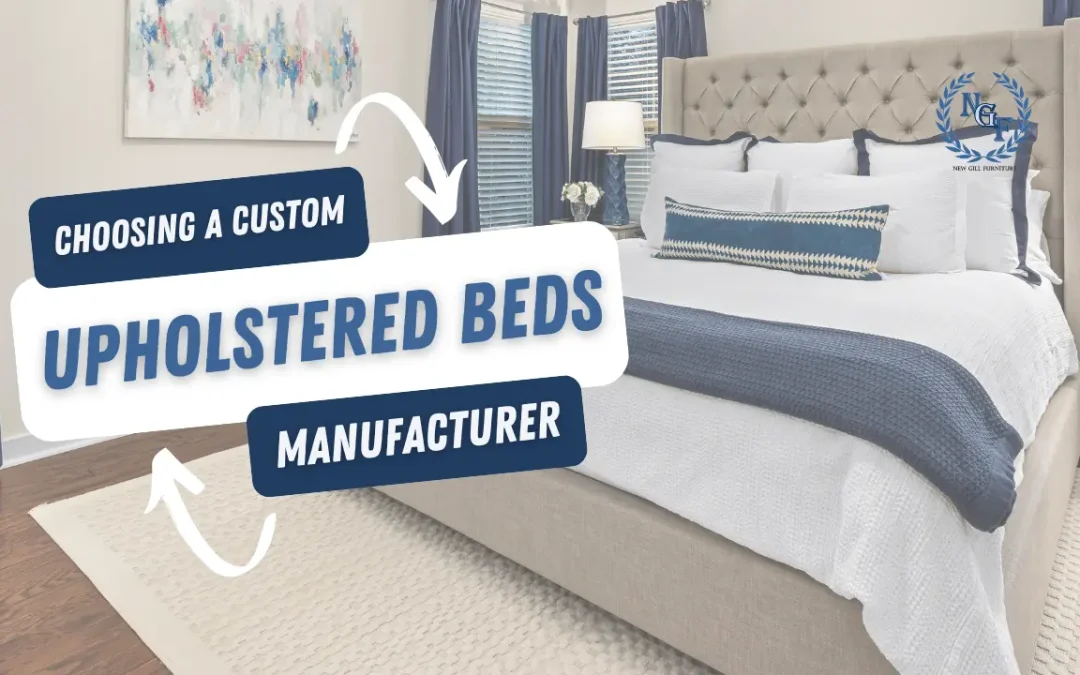
A missed bed delivery does more than delay a room setup. It can hold up an entire install, frustrate a retail customer, or force a designer to compromise on the final look. That is why selecting the right custom upholstered beds manufacturer is not just a sourcing decision. It is a business decision that affects timelines, margins, client satisfaction, and brand reputation.
For retailers, designers, and hospitality buyers, upholstered beds sit at the intersection of style, comfort, and production complexity. The piece has to look right, feel substantial, ship safely, and arrive with the right dimensions, fabric, finish details, and construction standards. When custom options are involved, the manufacturer matters even more.
What a custom upholstered beds manufacturer should actually deliver
A strong manufacturing partner should offer more than a broad catalog and a fabric book. Trade buyers need consistency across orders, clear communication during production, and the ability to adapt specifications without losing control over quality. Custom work only adds value when the process behind it is reliable.
That starts with construction. A well-made upholstered bed should have a stable frame, clean upholstery application, durable padding, and hardware that supports repeated assembly and long-term use. In a retail setting, that affects returns and customer reviews. In hospitality, it affects wear performance and maintenance cycles. In design projects, it affects whether the finished room looks refined or improvised.
Customization is the second requirement, but it needs to be practical. Offering dozens of fabrics is not enough if the manufacturer cannot maintain repeatability across production runs. The best partners provide meaningful flexibility – headboard heights, platform options, rail profiles, leg styles, stitch details, tufting, fabric and leather choices, and sizing adjustments – while keeping those options within a controlled production system.
Why local manufacturing changes the equation
For many trade buyers, North American production is no longer a preference alone. It is a risk-management strategy. Long offshore lead times, shifting freight costs, inconsistent communication, and limited recourse on quality issues have changed how buyers evaluate upholstered furniture suppliers.
A custom upholstered beds manufacturer with local production offers a more manageable process. Sampling is easier. Communication is faster. Timeline adjustments are more realistic. Quality concerns can be addressed without crossing multiple time zones and supply layers. That matters when a retailer is planning floor inventory, when a designer is coordinating trades, or when a hospitality buyer is trying to keep a property opening on schedule.
Canadian manufacturing in particular appeals to buyers who want craftsmanship with scalable output. It supports custom work without forcing every order into a one-off process that becomes difficult to price or repeat. That balance is where experienced manufacturers stand apart from small shops that can build beautiful pieces but struggle with volume, and from mass producers that can scale but offer limited flexibility.
How to assess a custom upholstered beds manufacturer
The first question is not whether the bed looks good in a photo. It is whether the manufacturer can produce that standard repeatedly. Ask how frames are built, what materials are used in the upholstery layers, how customization requests are documented, and how quality is checked before shipment.
Lead time deserves equal scrutiny. Fast turnaround is valuable, but only when it is credible. Trade buyers should look for a manufacturer that can explain production capacity, not just quote an optimistic timeline. A dependable supplier will tell you what is standard, what may extend lead times, and which custom features require extra planning.
The support model also matters. A retailer may need floor models, finish samples, and repeat ordering confidence. A design studio may need specification guidance and custom dimension discussions. A hospitality buyer may need larger volume coordination, freight planning, and material choices suited to heavy use. A manufacturer that understands these distinct trade needs is easier to work with over time.
Custom upholstered beds manufacturer for retail and design trade
Retailers and designers often want the same thing for different reasons: product that feels distinctive without becoming difficult to sell or specify. A strong custom upholstered beds manufacturer helps both groups bridge that gap.
For retailers, customization creates margin opportunity and product differentiation. Instead of competing on the same imported styles available everywhere, showrooms can offer tailored beds in selected fabrics, sizing combinations, and detail packages that better fit their market. The key is working with a manufacturer that can support merchandising while keeping ordering straightforward.
For designers, customization solves fit and finish problems. Ceiling heights vary. Wall proportions vary. Client preferences vary. A standard bed may be close, but close is not always enough in a carefully planned bedroom. The right manufacturer allows the design intent to hold, whether that means adjusting the headboard scale, refining the fabric selection, or aligning the bed details with other case goods and seating in the project.
This is where bench-crafted production paired with trade discipline becomes valuable. New Gill Furniture operates in that space by combining handcrafted Canadian manufacturing with the capacity to support ongoing dealer and project needs. For buyers who need both flexibility and follow-through, that model is practical.
The details that separate average from dependable
A bed can appear impressive at first glance and still disappoint in use. Upholstery alignment, foam selection, rail strength, and finishing consistency all show up after delivery. Trade buyers should pay attention to details that affect performance over time, not just showroom appeal.
Fabric application should be even and controlled, especially around corners, wings, and tufted sections. Seams should be intentional and consistent. The frame should feel substantial, not hollow or unstable. If storage or platform configurations are involved, the operating components should be designed for repeat use rather than occasional demonstration.
Material choice also has to fit the project. Residential applications may prioritize softness, texture, and visual warmth. Hospitality settings often require better cleanability, durability, and specification discipline. A reliable manufacturer helps guide those choices instead of treating every covering as interchangeable.
Where trade buyers often run into problems
The most common issue is not lack of options. It is lack of control. A supplier may promise broad customization, but if specifications are handled casually, errors multiply. The result is a bed that is technically custom but commercially costly.
Another issue is inconsistent communication. If approvals, revisions, and production milestones are unclear, small misunderstandings can become expensive delays. Trade buyers need a manufacturer that documents choices properly and responds with the urgency a project schedule requires.
There is also the challenge of scaling. Some suppliers handle a few custom pieces well but struggle when a dealer begins reordering or when a hospitality buyer needs volume. Others can manage volume but resist small modifications that matter to the finished product. The right partner is the one that can operate in both realities without sacrificing standards.
What long-term partnership looks like
A good first order matters. A good fifth order matters more. Over time, the value of a manufacturer shows up in repeatability, responsiveness, and problem prevention. Trade buyers do not just need furniture. They need a supply partner that reduces friction.
That means quotes that reflect real production requirements, not guesswork. It means customization options that are broad enough to support business growth but controlled enough to stay manufacturable. It means product quality that supports retail sell-through, design credibility, and commercial durability.
A dependable custom upholstered beds manufacturer becomes part of how a retailer protects its reputation, how a designer executes a vision, and how a hospitality buyer controls project risk. That is why the selection process should focus on operational strength as much as aesthetics.
The best upholstered bed programs are built on clear standards, flexible production, and craftsmanship that holds up after installation. When those elements are in place, customization stops being a complication and starts becoming a competitive advantage.