
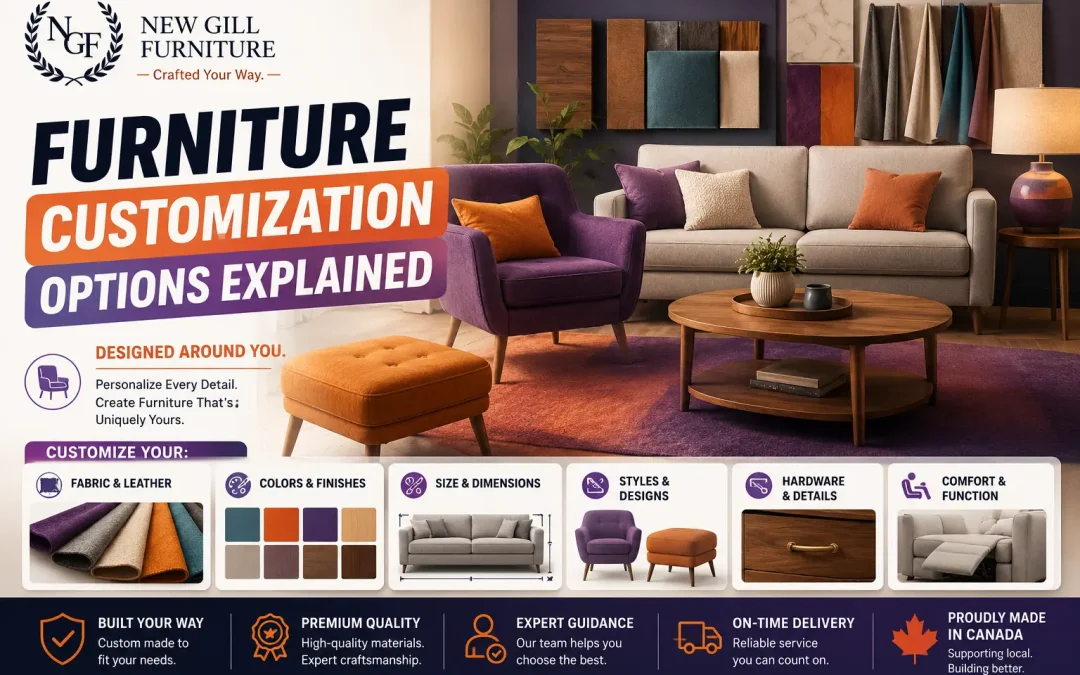
A sectional that fits a showroom floor can be too deep for a condo model suite. A bed that looks right in a concept board can fail the specification if its fabric cannot withstand commercial use. That is why furniture customization options explained clearly is more than a sales conversation – it is a practical part of sourcing furniture that performs for the client, the space, and the project schedule.
For retailers, designers, and hospitality buyers, customization creates a stronger assortment and a more precise finished environment. It also requires disciplined decisions. The right options improve fit, durability, and perceived value; the wrong combination can add cost, complicate production, or extend lead times without solving a meaningful need.
Furniture Customization Options Explained for Trade Buyers
Custom furniture generally falls into two categories: configurable products and fully custom manufacturing. Configurable products begin with an established frame or design and allow selected changes, such as upholstery, finish, leg style, or size. This route is often the most efficient choice for dealer orders and repeatable projects because the core construction is already proven.
Fully custom manufacturing begins with a unique requirement. A designer may need a non-standard banquette length, a storage unit built around a particular wall, or an upholstered bed with a specific headboard profile. This approach gives the project greater freedom, but it calls for clear drawings, complete material selections, and realistic review time before production begins.
The best path depends on the project. A retailer building a broad, dependable assortment may prioritize configurable frames in several fabric and finish combinations. A hospitality buyer may require a tailored specification to meet room layouts, traffic demands, and brand standards. In both cases, early clarity prevents costly revisions later.
Dimensions and Scale: Customization That Starts With Fit
Size is usually the first customization decision because it affects every other part of the piece. Sofa depth, seat height, arm width, bed dimensions, table length, and storage capacity all influence how furniture works in the room. A few inches can determine whether a sectional supports easy circulation or overwhelms a floor plan.
For residential work, sizing often responds to room proportions and the client’s habits. A compact sofa may be necessary for an urban apartment, while a deeper sectional may suit a family room designed for extended seating. For commercial and hospitality spaces, dimensions must also account for guest flow, accessibility considerations, cleaning access, and repeated daily use.
Custom dimensions should be reviewed alongside construction realities. Extending a table may require additional support. Enlarging a headboard can change how it is packaged, delivered, and installed. Reducing a sofa’s depth may affect seat comfort if cushion construction is not adjusted appropriately. A capable manufacturer can identify these implications before the order is released.
Establish the Non-Negotiables First
Trade buyers should provide finished dimensions, site measurements, elevator or doorway limitations, and intended use before discussing decorative details. If a piece must fit a specific alcove or coordinate with existing millwork, those requirements belong at the beginning of the specification, not after fabrics and finishes have been approved.
Upholstery: Fabric, Leather, and Performance Requirements
Upholstery is one of the most visible ways to differentiate a furniture program. Fabric and leather determine the first impression of a sofa, chair, bed, or banquette, but appearance is only part of the decision. The selected covering must suit the setting, expected wear, maintenance plan, and budget.
For a retail showroom, offering a curated range of textures and colors can help customers personalize an established silhouette. For designer projects, the upholstery selection may need to coordinate with drapery, wallcoverings, and flooring. Hospitality specifications often place greater weight on cleanability, durability, and consistency across multiple rooms or public areas.
Performance fabrics can be a practical choice where spills, frequent seating, or family use are expected. Leather offers a distinct hand and can age attractively, but the grade, finish, and maintenance expectations should be understood before it is specified. Not every material is suitable for every frame, either. Tufting, channeling, tight upholstery, and complex curves can affect how a fabric or leather performs and how the finished surface appears.
Cushioning also deserves attention. Seat firmness, back support, fill type, and cushion configuration shape long-term comfort. A softer seat may feel inviting on a showroom floor, while a firmer construction may hold its profile better in a high-use environment. There is no universal best choice – the right specification follows the intended user and setting.
Wood Species, Finish, and Grain Character
Wood customization makes a major difference in bedroom furniture, coffee tables, TV stands, storage pieces, and occasional furniture. Buyers can often select from finish tones, sheen levels, hardware, and leg or base styles. In more tailored work, wood species, edge profiles, and construction details may also be adjusted.
Finish samples should be evaluated against the actual wood rather than viewed as color names alone. Natural grain, stain absorption, and protective topcoats can create variation from piece to piece. That variation is part of the character of real wood furniture, particularly in handcrafted production, but it should be discussed with clients who expect a highly uniform appearance.
A dark finish can add visual weight and suit a formal setting, while lighter tones can make a compact room feel more open. Matte finishes often support a contemporary look and can reduce the visibility of minor surface marks. Higher-sheen finishes provide a more polished appearance but may show fingerprints or scratches more readily. The correct choice is tied to the design direction and the furniture’s day-to-day use.
Design Details That Make a Program Your Own
Once size and materials are established, smaller details turn a familiar frame into a distinct product offering. Leg style can shift a sofa from traditional to transitional or modern. Nailhead trim, contrast piping, button tufting, channeling, handle selection, and drawer configurations can reinforce a retailer’s assortment or a designer’s concept.
These details should support the overall design rather than compete with it. A heavily detailed headboard may be appropriate in a boutique hotel suite but unnecessary in a clean-lined condominium package. Likewise, an open base can make a sofa feel lighter in a small space, while a more substantial plinth base may better suit a grounded, architectural interior.
For volume programs, it is wise to limit the number of custom variables. A controlled selection of approved fabrics, finishes, and hardware protects consistency across orders and makes replenishment easier. New Gill Furniture works with trade partners to balance that flexibility with production discipline, helping buyers build distinctive furniture programs without creating avoidable complexity.
Custom Furniture for Repeat Orders and Large Projects
Customization becomes more valuable when it can be repeated reliably. Retailers need confidence that a successful floor model can be reordered. Designers need matching pieces for phased installations. Hospitality procurement teams need furniture that remains consistent across rooms, locations, or future refreshes.
This is where documentation matters. Approved drawings, material codes, finish references, hardware selections, and dimensions should be retained as part of the product specification. A verbal description such as “warm walnut finish” leaves too much room for interpretation. A documented finish sample and item code create a far more dependable path for repeat production.
Lead time should also be considered early. Standard configurations may move through production faster than a first-time custom design, especially when new materials, prototypes, or construction changes are involved. Fast turnaround is valuable, but it depends on complete approvals and timely decisions from all parties.
Questions to Settle Before Production
Before placing a custom furniture order, trade buyers should be able to answer four practical questions: What must the piece do in the space? Which dimensions are fixed? Which materials meet the use requirements? And which visual details are essential rather than simply desirable?
Clear answers keep the project focused. They also make it easier for the manufacturer to recommend a construction, configuration, and material package that fits the budget and timeline. A well-specified custom piece is not just more attractive on delivery day – it is easier to sell, install, maintain, and reorder.
The strongest custom furniture programs begin with a precise brief and a manufacturing partner willing to test the details. When dimensions, materials, and design intent are aligned before production, the finished piece has a better chance of doing what trade furniture should do: support the project long after the installation is complete.