
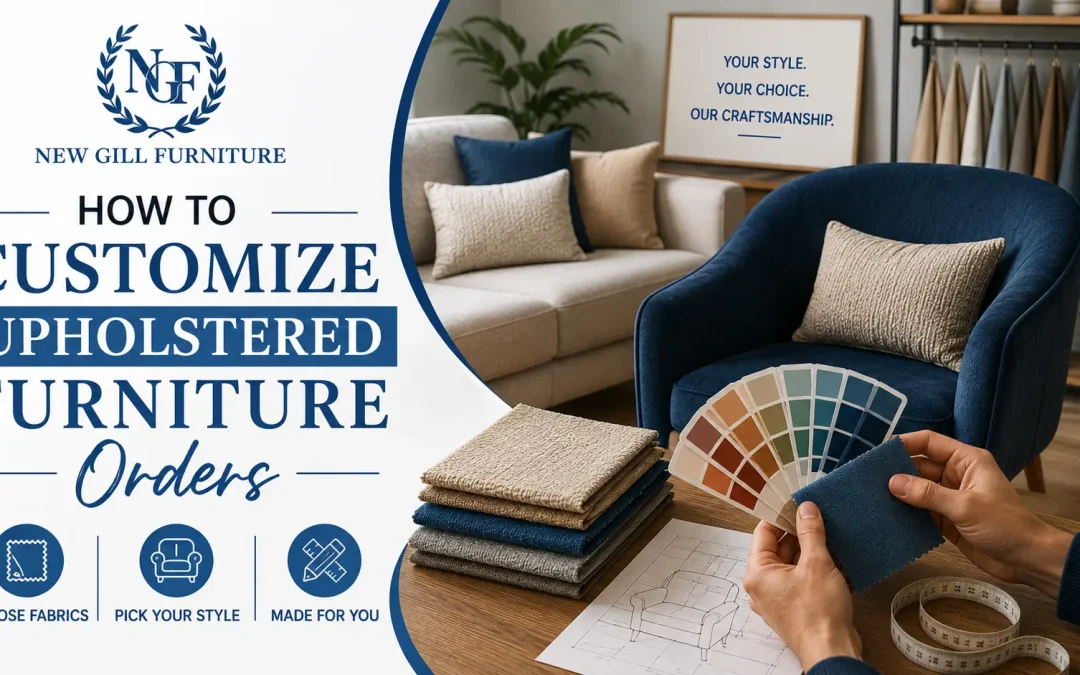
A custom sofa that looks right in a presentation but arrives too deep for the room, too soft for a hotel lobby, or finished in an unapproved fabric creates expensive problems. Knowing how to customize upholstered furniture orders means translating a design direction into specifications a manufacturer can build consistently, inspect carefully, and deliver on schedule.
For retailers, designers, and hospitality buyers, the strongest custom order is not simply the most detailed one. It is the order with the right details decided at the right stage – from frame dimensions and cushion construction to fabric performance, leg finish, and final approval.
Start With the Project Requirements
Before selecting upholstery or decorative details, define how the piece will be used. A residential sectional for a family room requires a different build approach than lounge seating for a boutique hotel, a showroom floor model, or a multi-unit residential project.
Establish the intended setting, user volume, installation date, and budget range early. These factors guide nearly every customization decision. For example, a hospitality project may prioritize cleanability, abrasion resistance, fire-code requirements, and repeatable production. A designer-led residential project may place greater weight on silhouette, comfort preference, and a specific textile palette.
Dimensions need the same level of attention. Provide overall width, depth, height, seat height, arm width, back height, and any space restrictions such as elevators, door openings, stairwells, or built-in millwork. For sectionals, identify each component, the facing direction, connection method, and the final room layout. A clear floor plan prevents orientation errors that are difficult to correct once production begins.
How to Customize Upholstered Furniture Orders by Specification
A specification sheet turns visual intent into a buildable order. It should state exactly what is being made rather than relying on a reference image alone. Photos are useful for communicating style, but they do not define construction, scale, or materials.
Include the product type and model reference, requested dimensions, quantity, upholstery material, cushion configuration, leg or base selection, finish, trim details, and delivery requirements. If the project calls for a modified standard design, identify every change from the original model. This makes the approval process more efficient and protects consistency across repeat orders.
Confirm the Frame and Proportions
The frame determines the furniture’s long-term stability and the overall look of the upholstered piece. Custom dimensions can be appropriate when a project has strict spatial needs, but proportion must remain balanced. Extending a sofa without considering seat supports, cushion segmentation, or the relationship between arm width and back height can compromise both appearance and performance.
Discuss whether the piece should retain standard seat depth and seat height or be modified for a particular user group. Deeper seating often creates a more relaxed profile, while a shallower seat can suit formal spaces, seniors, or compact urban interiors. Similarly, low-profile furniture may support a modern concept but can be less practical in high-turnover commercial settings.
For large projects, confirm whether all pieces must share identical dimensions or whether room-specific variations are acceptable. Standardizing where possible helps control costs, streamline production, and simplify future replacement orders.
Choose Upholstery for Performance, Not Just Color
Fabric and leather should support the project’s visual direction and its real-world demands. Request current samples and review them under the actual lighting conditions of the space when possible. Color can shift significantly between a showroom, daylight, warm residential lighting, and commercial interiors.
For high-use applications, consider abrasion ratings, stain resistance, cleanability, weave stability, and resistance to pilling. Patterned fabrics require additional planning because the pattern must align across cushions, panels, and seams. Large repeats can increase material usage and may affect the final cutting layout.
Leather brings a different set of considerations. Natural variation in grain, tone, and markings is part of the material’s character. Buyers should confirm whether the desired look calls for a more uniform protected leather, a softer natural leather, or another finish suited to the intended level of use.
When supplying customer-owned material, often called COM, verify the usable fabric width, repeat, backing, stretch, and yardage requirements before purchase. A material that appears suitable may not upholster well around tight curves, tufting, or heavily tailored edges. Approval should also account for possible dye-lot variation, particularly when an order will be produced in stages.
Specify Comfort and Cushion Construction
Comfort is not a single setting. It depends on foam density, cushion thickness, fiber wrap, suspension, back-fill construction, and the way a user is expected to sit on the piece. A low, lounge-style sofa can be intentionally relaxed, while a reception chair may require a firmer, more supportive sit that retains its shape through frequent use.
Ask for clarity on seat cushion style: fixed, loose, reversible, boxed, or bench-seat construction. Each option changes the visual profile and maintenance needs. A single bench cushion offers a clean, tailored look, but it can be heavier to rotate and may show use differently than separate cushions. Loose reversible cushions can extend usable life, although they require more regular attention to maintain a neat appearance.
Back cushions deserve the same consideration. Loose backs create a softer residential feel but may need regular fluffing. Tight backs reduce maintenance and can be better suited to public spaces, depending on the design. For hospitality and contract work, specify the desired balance between comfort, appearance retention, and serviceability.
Select the Details That Define the Piece
Small construction details have a large influence on how upholstered furniture reads in a room. Nailhead trim, contrast welting, channel tufting, button tufting, topstitching, skirt styles, and exposed wood can all reinforce a project concept. They can also affect lead time, labor requirements, material yield, and cleaning practicality.
Exposed legs and bases should be specified by style, height, wood species or finish, and placement. A leg change may alter the seat height, which can affect comfort and accessibility. If the furniture will sit on delicate flooring, confirm whether glides or protective pads are required.
Tailored details should be evaluated for the setting. Tufting and deep channels create a strong visual statement, but they can collect dust and may be less suitable for spaces that require quick, frequent cleaning. Contrast piping can sharpen the silhouette, yet it introduces another material and color approval point. These are worthwhile trade-offs when the detail is central to the design, not when it adds complexity without a clear purpose.
Build an Approval Process Before Production
Custom work benefits from defined checkpoints. The goal is to resolve questions before materials are cut and frames enter upholstery. Review the order specification with all decision-makers, especially when a retailer, designer, purchasing team, and end client are involved.
For substantial modifications, a drawing, finish sample, fabric memo, or pre-production confirmation can prevent misunderstandings. Confirm the final dimensions with tolerances appropriate to handcrafted furniture, verify fabric direction and pattern placement, and document the approved leg finish and trim details. If a fabric has a directional pile or a distinct pattern, identify its intended orientation in writing.
One designated approver is especially valuable for larger orders. Multiple informal approvals can lead to conflicting instructions, delayed production, and changes that affect cost. A single, consolidated sign-off gives the manufacturer a reliable production reference.
Plan for Volume, Lead Time, and Future Reorders
Customization and speed can work together when specifications are organized early. Last-minute changes to fabric, dimensions, or detailing can affect material availability and production sequencing. For deadline-sensitive installations, work backward from the required delivery date and allow time for material sourcing, approvals, manufacturing, freight, and installation coordination.
For multi-location programs or hospitality rollouts, preserve an approved specification package. Record the model, dimensions, cushion build, textile name and color, finish formula, hardware, and any approved exceptions. This creates a dependable foundation for replenishment and replacement orders.
New Gill Furniture supports trade buyers with handcrafted Canadian production, custom upholstery options, and the capacity to coordinate repeatable specifications across residential, retail, and commercial projects. The most productive partnerships begin with a clear brief and stay efficient through documented approvals.
A well-customized upholstered order should do more than match a finish board. It should fit the space, perform for its users, support the project’s schedule, and remain possible to reproduce when the next room, location, or client asks for the same standard.