
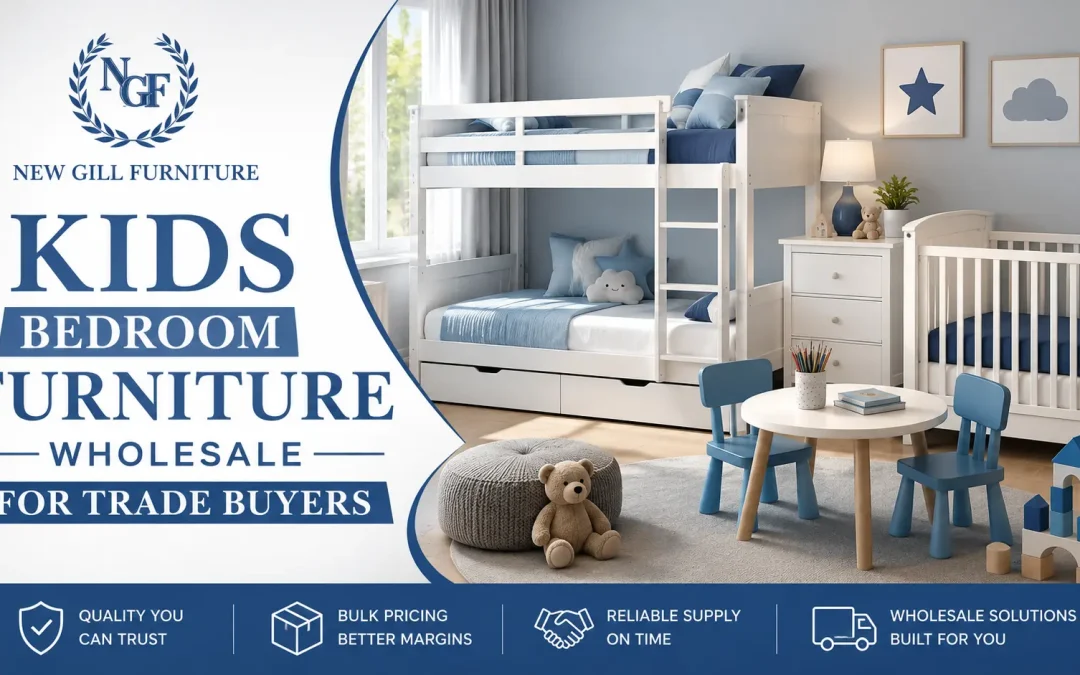
A kids’ furniture collection can create repeat customers for a retailer or become a source of costly claims, missed installation dates, and frustrated parents. The difference often starts at the sourcing stage. For buyers seeking kids bedroom furniture wholesale, the priority is not simply finding smaller beds and storage pieces at a competitive price. It is building a dependable program with appropriate materials, practical designs, consistent construction, and the capacity to support changing customer needs.
For furniture retailers, interior designers, and project purchasers, children’s bedroom furniture requires a more considered buying approach than standard bedroom casegoods. It must satisfy adult expectations around durability and safety while meeting the real demands of growing children, tight room layouts, and changing tastes. A trusted manufacturing partner helps make that balance commercially viable.
What Trade Buyers Should Expect From Kids Bedroom Furniture Wholesale
Wholesale children’s furniture should give your business more than access to inventory. It should provide a clear path to building a category that fits your showroom, design practice, or project requirements. That includes reliable product specifications, responsive communication, repeatable quality, and production lead times that can be planned around.
The strongest programs begin with well-built core pieces: upholstered beds, wood bed frames, dressers, nightstands, desks, bookcases, and storage solutions. These are the items customers use daily, and they are also where construction quality becomes visible over time. Drawer operation, hardware strength, joinery, finish durability, and upholstery workmanship all affect whether a piece continues to represent your business well after delivery.
A wholesale partner should also understand that a children’s room rarely stays the same for long. A toddler’s room may later become a school-age study space, then a teen bedroom. Furniture with lasting proportions, adaptable finishes, and thoughtful storage gives retailers and designers a better story to tell than novelty pieces designed for only one short phase.
Build a Collection Around Everyday Use
A complete assortment does not need to be oversized. It needs to be purposeful. Retailers may lead with a small number of bed styles, complementary storage, and coordinated accents, then use customization to broaden the offer without carrying excessive floor inventory. Designers may require a more focused package built around room dimensions, finish direction, and the family’s storage needs.
Beds remain the visual center of the room. Upholstered headboards can bring softness, texture, and an elevated look to a child’s or teen’s room, particularly when fabric selection is carefully controlled. Wood beds offer a different advantage: they can deliver a more architectural, long-lasting appearance and coordinate naturally with dressers, desks, and shelving.
Storage is where wholesale buyers can create meaningful value. A dresser should offer usable drawer depth and dependable function, not simply a large exterior footprint. Nightstands need room for books, charging accessories, and bedtime essentials. Bookcases, cabinets, and TV stands can help organize a room as a child’s needs change. The most successful collections account for how families actually live rather than relying on decorative appeal alone.
Consider the Room, Not Just the Piece
Children’s bedrooms can be compact, especially in urban homes, condominiums, and multi-bedroom family properties. Oversized furniture may look impressive in a showroom but create problems in a customer’s space. Offering multiple sizing options, low-profile silhouettes, and pieces that work together can help your customers make better choices.
For design projects, measure access routes as carefully as the room itself. Stairwells, elevators, narrow halls, and tight turns all influence what can be delivered and installed efficiently. A manufacturer with custom capabilities can be particularly valuable when standard dimensions do not suit the site.
Quality and Safety Are Business Requirements
Parents understandably expect furniture in a child’s room to be stable, durable, and made with care. Trade buyers should treat those expectations as fundamental purchasing criteria. Ask clear questions about materials, construction methods, finishing processes, upholstery components, and hardware.
For casegoods, solid wood elements, quality engineered wood where appropriate, dependable drawer systems, and properly applied finishes all contribute to long-term performance. For upholstered pieces, fabric durability, foam selection, frame construction, and careful tailoring determine whether the furniture maintains its appearance under everyday use.
Safety considerations also shape product selection. Casegoods should be designed with stability in mind and supplied with appropriate anti-tip guidance where relevant. Avoid sharp, exposed details in high-contact areas, and consider how handles, corners, and bed profiles will function in an active family environment. The specific requirements may vary by product, market, and project type, but safety should never be an afterthought added after a collection is specified.
A lower upfront cost can be attractive, but it is not always the lower-cost decision for a retailer or designer. A damaged finish, failed drawer, or weak frame can lead to service calls that quickly erase margin. Better construction protects the customer experience and protects your reputation.
Customization Helps You Sell Beyond the Standard Set
Customization is one of the clearest advantages of working with a capable North American manufacturer. It allows a showroom to differentiate its assortment without committing to a completely bespoke process for every order. It also gives designers the control needed to align furniture with a broader interior concept.
Useful customization can include sizing, wood finishes, fabric or leather selections, leg styles, headboard height, trim details, and storage configurations. For a retailer, these choices can support a curated collection that feels exclusive to the showroom. For an interior designer, they can solve practical issues such as matching existing millwork, fitting a specific wall, or coordinating several bedrooms within one home.
Customization does require discipline. More options can increase selling power, but too many unstructured choices can slow decisions and create ordering errors. The best approach is to establish a focused menu of approved materials and finishes, with a clear process for project-specific requests. This keeps the sales experience manageable while preserving flexibility where it matters most.
Evaluate Lead Times, Capacity, and Communication
A beautiful product program has limited value if it cannot be delivered predictably. Lead time is especially important in children’s furniture because purchases are often connected to a move, renovation, new baby, school transition, or project installation date. Buyers need realistic production information, not vague estimates.
Ask prospective suppliers how they manage standard orders, custom orders, repeat programs, and larger-volume requirements. A manufacturer may be an excellent fit for one-off designer pieces but not structured for retail replenishment, or vice versa. The right partner is the one whose production model matches your business.
Communication is equally important. Trade buyers need accurate specifications, finish confirmation, order status visibility, and a clear process for addressing exceptions before they become delivery problems. Local or regional manufacturing can offer meaningful advantages here, particularly when compared with long international supply chains that leave little room to respond to changes.
New Gill Furniture supports trade buyers with handcrafted Canadian production, customization options, and the manufacturing capacity needed for retailer, designer, and volume-project requirements. That combination can be especially valuable when quality standards and delivery coordination are central to the sale.
Price for Margin, Service, and Long-Term Value
Wholesale pricing should be evaluated within the full economics of the category. Landed cost matters, but so do freight, handling, floor space, assembly requirements, delivery complexity, warranty exposure, and the time your team spends resolving problems. A product that delivers consistent quality and fewer service issues can support healthier margin than a lower-priced alternative.
Retailers should determine which pieces will serve as traffic drivers and which can carry stronger margins through premium finishes, upholstery upgrades, or coordinated storage. Designers should build allowances for customization, site coordination, and installation into project pricing. Hospitality or multi-unit buyers may prioritize repeatability and volume planning over broad finish selection.
There is no single right assortment or purchasing model. A boutique showroom may benefit from a tightly edited, design-forward collection. A larger retailer may need scalable bed and storage programs with repeat ordering potential. A design firm may require fewer pieces but deeper customization. The supplier relationship should be structured around those realities.
Questions to Ask Before Placing a Wholesale Order
Before committing to a kids’ furniture supplier, clarify the details that affect your customer promise. Confirm available sizes, finish and fabric options, construction specifications, order minimums, packaging standards, delivery coordination, warranty handling, and procedures for custom-order approvals.
It is also wise to request a clear understanding of what is standard and what is custom. This distinction affects production timing, pricing, returns, and customer expectations. For custom work, documented approvals for dimensions, materials, and finish selections are essential. Small assumptions at the ordering stage can become significant problems once production begins.
A children’s furniture category earns loyalty when it feels considered from every angle: the bed is comfortable and well made, the dresser functions properly, the finish holds up, the style has room to grow, and the order arrives when promised. Choose wholesale partners that make those outcomes easier to deliver, and your collection can become a dependable part of your business rather than another category to manage closely.