

A TV that feels too wide, too low or unsteady can throw off your whole room. Worse, the wrong stand can create safety risks, messy cables and poor viewing comfort. The good news? Choosing the right size is simple when you match your TV width, base depth, stand height and room layout before you buy.
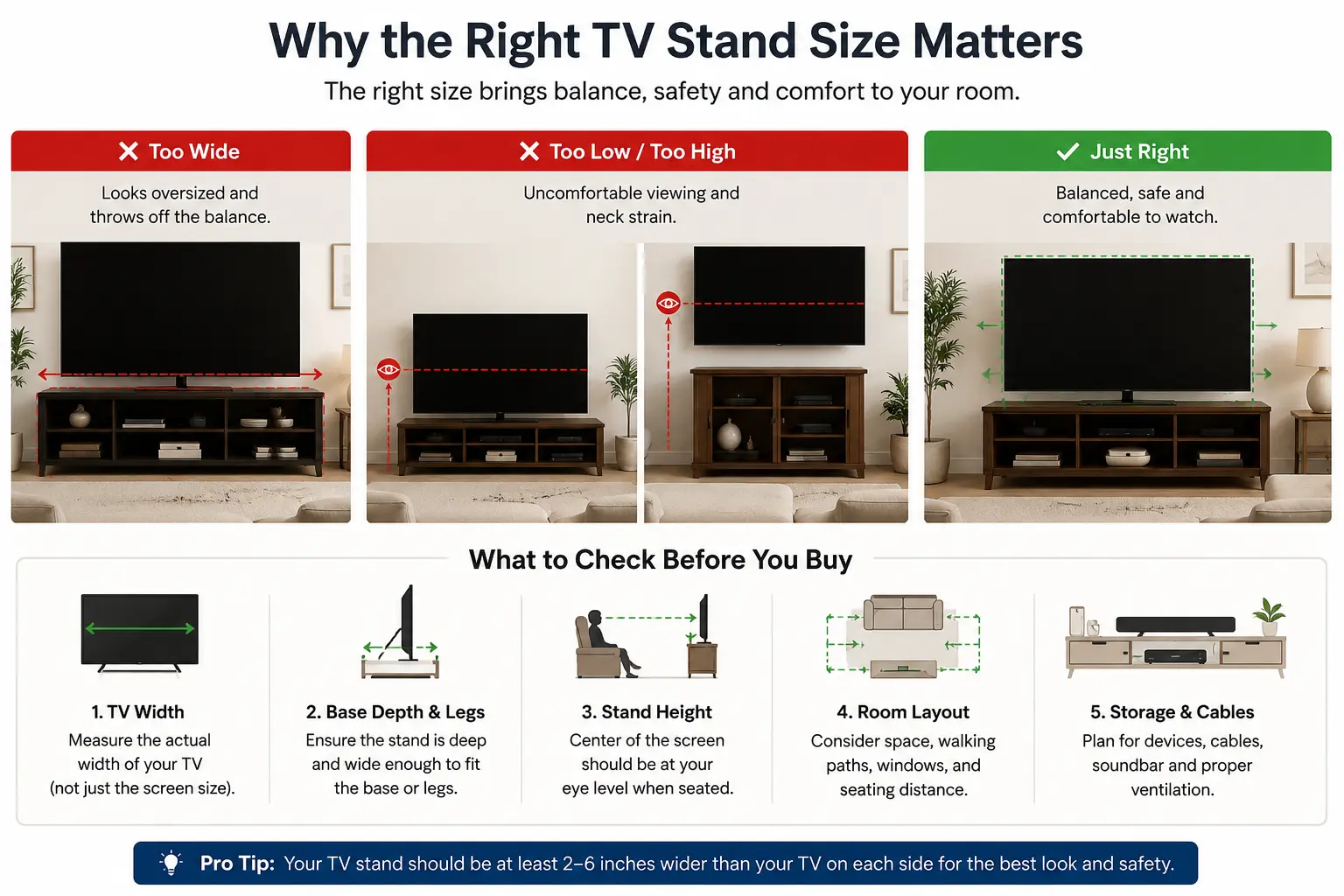
How Are Television Screens Measured?
TV screens are measured diagonally from one corner of the screen to the opposite corner. That measurement does not include the full width, stand legs, bezel, or base depth.
So, when people ask how television screens are measured, the answer is: diagonally across the screen. But when choosing furniture, the more important number is the TV’s actual width.
For example, typical dimensions are:
| TV Size | Approx. TV Width | Best Stand Width |
|---|---|---|
| 40 inch TV | 35 inches / 89 cm | 44–50 inches |
| 50 inch TV | 44 inches / 112 cm | 52–60 inches |
| 55 inch TV | 48 inches / 122 cm | 57–65 inches |
| 60 inch TV | 52 inches / 132 cm | 60–70 inches |
| 65 inch TV | 57 inches / 145 cm | 66–75 inches |
| 70 inch TV | 61 inches / 155 cm | 72–80 inches |
| 75 inch TV | 65 inches / 165 cm | 78–85 inches |
| 85 inch TV | 74 inches / 188 cm | 86–96 inches |
Health Canada advises reducing furniture and TV tip-over risks by securing furniture, avoiding unstable setups and keeping heavy items properly placed.
What Size TV Stand Is Right for Your TV?
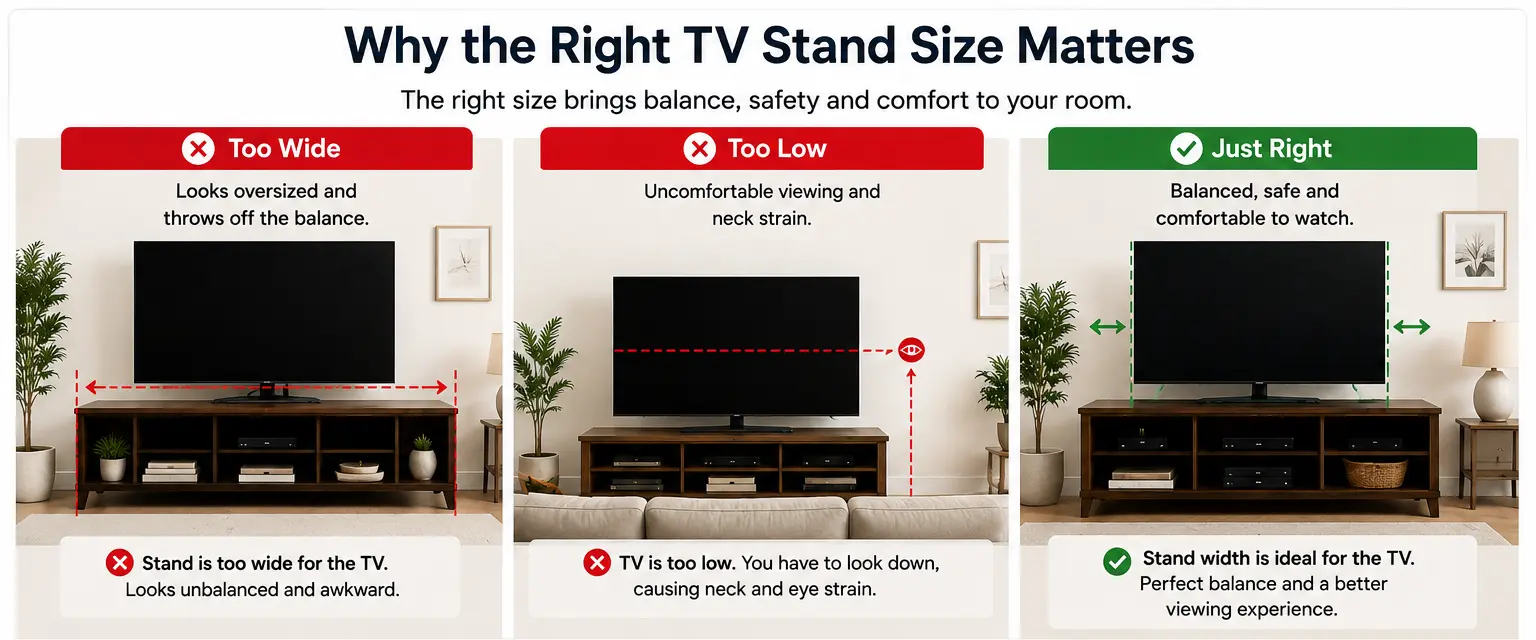
The best rule is simple: your TV stand should be at least 2 to 6 inches wider than your TV on each side. That means the stand should usually be 4 to 12 inches wider than the actual TV width, not just the advertised screen size.
TV screen sizes are measured diagonally, so a 65-inch TV is not 65 inches wide. You need to check the actual width, base width, depth and weight before choosing a television stand.
For most Ontario homes, the right TV stand should:
- Be wider than the TV
- Support the TV’s weight
- Fit the TV legs or centre base
- Place the screen near eye level
- Leave room for a soundbar, gaming console, router and décor
- Match the room layout without blocking walkways
For more living room furniture options, explore New Gill Furniture TV stands or living room furniture.
TV Stand Size Guide: Standard TV Stand Size Chart
A good TV stand size guide should include width, height, depth, storage, safety and room flow. Width matters most, but it’s not the only detail.
| Search Question | Recommended Answer |
|---|---|
| What size TV stand do I need for a 50-inch TV? | Choose a 52–60 inch stand |
| What size TV stand do I need for a 55-inch TV? | Choose a 57–65 inches stand |
| What size TV stand do I need for a 65-inch TV? | Choose a 66–75 inches stand |
| What size TV stands for 70 inches TV? | Choose a 72–80 inches stand |
| What size TV stands for 75 inches? | Choose a 78–85 inches stand |
| What size TV stands for 85 inches TV? | Choose an 86–96 inches stand |
This standard TV stand size range gives your TV visually clean and helps prevent the screen from looking oversized.
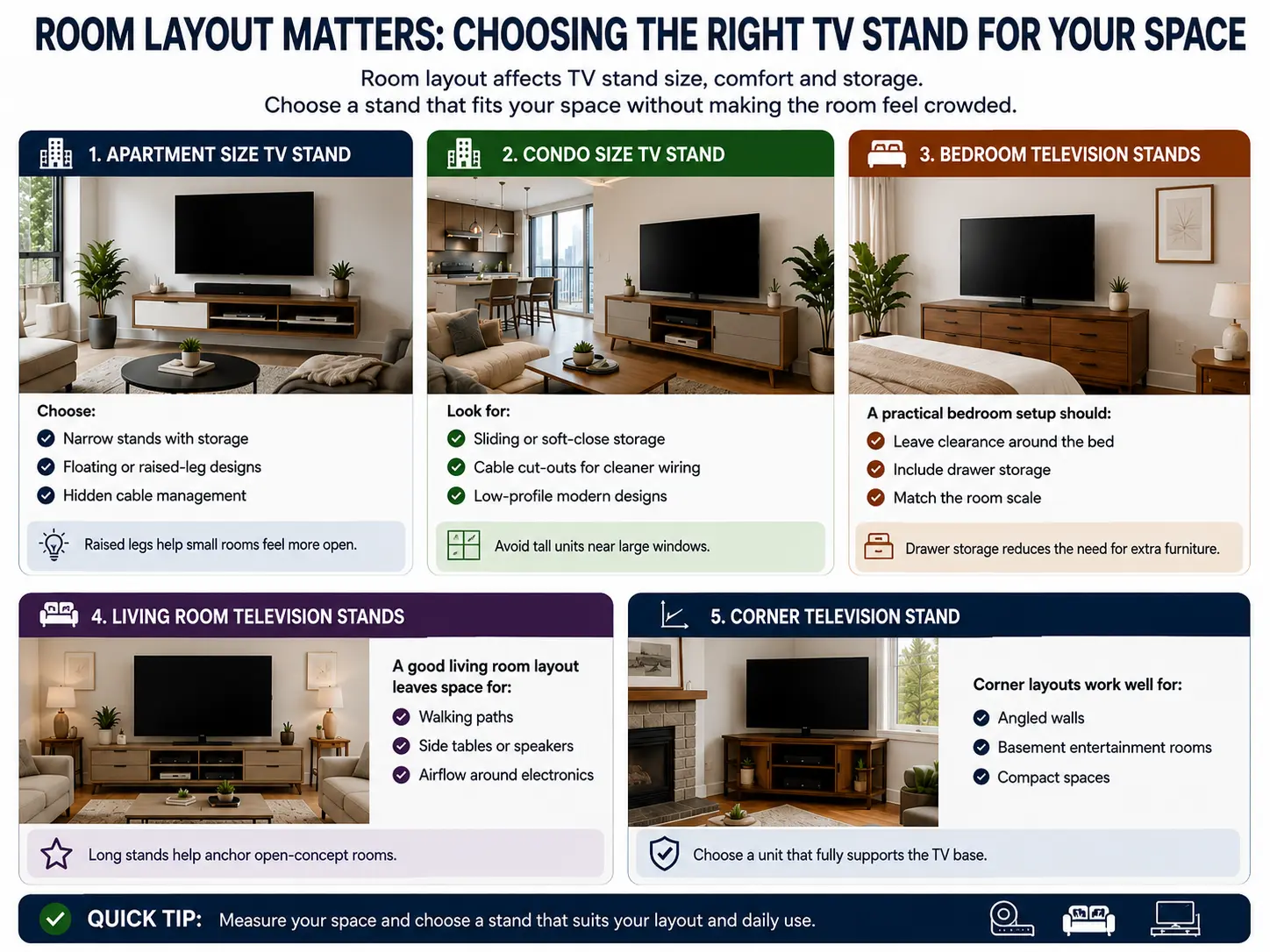
Room Layout Matters: Choosing the Right TV Stand for Your Space
Your room layout affects the best TV stand size, viewing comfort, storage and overall room flow. A stand that fits a large family room may feel too bulky in a condo or bedroom.
Apartment Size TV Stand
An apartment size TV stand should maximize function without making the room feel crowded. In smaller apartments, wide furniture can block walking paths and make the space feel tighter than it is.
Choose:
- A narrow television stand with built-in storage
- Floating or wall-mounted consoles to free up floor space
- Open shelving to create a lighter visual feel
- Compact TV stands with hidden cable management
For studio apartments or compact layouts, a stand with raised legs can also make the room appear more open because more floor remains visible.
Condo Size TV Stand
A condo size TV stand should have practical layout storage, scale and clean design. Many Ontario condos have open-concept layouts where the TV area connects directly to the kitchen or dining space, so oversized furniture can disrupt the visual flow.
Look for:
- Sliding cabinet doors instead of wide swing doors
- Soft-close storage compartments
- Cable cut-outs to reduce visible wires
- Low-profile modern television stands that maintain sightlines across the room
If your condo has floor-to-ceiling windows, avoid tall television stands that may visually block natural light.
Bedroom Television Stands
For bedroom television stands, comfort matters more than size alone. The TV should sit slightly higher than in a living room so it remains easy to watch while lying in bed, but not so high that it strains your neck.
A practical bedroom setup should also:
- Leave enough clearance around dressers and drawers
- Avoid sharp furniture corners near walkways
- Include storage for remotes, chargers or streaming devices
- Match the room scale without overpowering the bed
In smaller bedrooms, a TV stand with drawers can reduce the need for extra furniture and improve storage efficiency.
Living Room Television Stands
For living room television stands, start by measuring the wall width first, not just the TV. The stand should feel proportionate to both the television and the room itself.
A good living room layout leaves space for:
- Side tables and lamps
- Speaker placement
- Walking paths between furniture
- Airflow around electronics
- Decorative styling without clutter
In open-concept Ontario homes, long television stands often help visually anchor the seating area and create better balance across large walls.
Corner Television Stand
A corner television stand works well when fireplaces, windows or entryways limit usable wall space. Unlike standard flat-wall setups, corner TV tables for flat screens can improve viewing angles while freeing up the centre of the room.
Corner layouts work especially well for:
- Condos with angled walls
- Basement entertainment rooms
- Secondary family rooms
- Compact living spaces with limited wall width
Choose a corner unit deep enough to fully support the TV base while still allowing proper cable access and ventilation behind the screen.
TV Stand Depth, Base Width and Soundbar Clearance
Competitors often focus only on width. In real homes, depth and clearance matter just as much.
Check these details before buying:
- TV leg spacing: Make sure both legs fit fully on the stand.
- TV base depth: The base should not hang over the front or back.
- Soundbar room: Leave space below or in front of the TV.
- Console ventilation: Gaming systems and receivers need open airflow.
- Cable routing: Choose a stand with back openings or cable cut-outs.
- Outlet location: Make sure cords reach without stretching.
If you use gaming consoles, receivers or streaming boxes, choose a television table stand with open shelving or vented cabinet doors.
TV Stand Height: What Is Comfortable?
The best TV stand height keeps the centre of the screen close to seated eye level. For most sofas, that means the TV centre should sit around eye height when you are seated.
A low sofa may need a lower stand. A tall sectional or recliner setup may need a high television stand. For bedrooms, taller stands often work better because you watch from a higher angle.
Avoid placing the screen too high. It may look dramatic, but it can feel uncomfortable during long movies or hockey nights.
Safety, Ventilation and Cable Management
A TV stand should be stylish, but it also needs to be safe.
Use these safety tips:
- Choose furniture rated for your TV’s size and weight.
- Anchor large TVs or tall television stands when needed.
- Do not place heavy items on unstable furniture.
- Keep cords away from kids and pets.
- Leave airflow around electronics.
- Avoid glass television stand options in busy play areas unless the glass is tempered and rated for the load.
Best TV Stand Styles for Modern Ontario Homes
The right style depends on your room, storage needs and daily lifestyle.
Popular options include:
- Modern television stand: Clean lines, neutral colours, simple storage
- Contemporary television stands: Sleek finishes for newer homes and condos
- White television stand: Bright choice for smaller rooms
- Rustic television stand: Warm, cozy look for family rooms
- Solid wood television stand: Durable and timeless
- Metal television stands: Good for industrial-style rooms
- Small television stands: Best for bedrooms, apartments and compact spaces
- Long television stands: Best for 70, 75 and 85-inch TVs
For local options, browse modern TV stands, solid wood furniture and bedroom furniture.
How to Choose a TV Stand from New Gill Furniture in Ontario
When shopping with New Gill Furniture, start with your TV size, then match the stand to your room.
Use this simple checklist:
- Measure the actual TV width.
- Measure the TV legs or base.
- Choose a stand wider than the TV.
- Check weight capacity.
- Pick the right height for your seating.
- Plan storage for remotes, consoles, routers, and décor.
- Match the finish to your furniture.
- Think about kids, pets and daily use.
For help choosing the right fit, visit New Gill Furniture in Ontario or explore furniture collections.
Custom Furniture and Fast Delivery
Every home has a different layout, TV size and storage needs. That is why New Gill Furniture offers both custom furniture solutions and ready-made options for single purchases or bulk orders.
Whether you need a custom TV stand for a condo, a full furniture setup for a new home, or bulk furniture for rental properties, offices, staging projects, or commercial spaces, our team can help create furniture that fits your space and style.
We also provide urgent and fast delivery across Ontario for customers who need furniture quickly without long wait times. From compact apartment TV stands to large entertainment units, we help you find the right fit without compromising on quality or function.
Choose the Right TV Stand for Comfort, Safety, and Style
The right TV stand makes your room feel balanced, safe and easy to enjoy. Measure the TV width, base depth, room layout, seating height and storage needs before choosing.
For Ontario homes, New Gill Furniture can help you find a TV stand that fits your screen, your space and your everyday lifestyle.
Ready to upgrade your TV setup? Explore New Gill Furniture’s TV stands and living room furniture to find the right size, style and finish for your home.
FAQs About Choosing the Right TV Stand Size
1. How big should your TV stand be compared to your TV?
Your TV stand should usually be wider than your TV by at least 4 to 12 inches overall. This creates better balance, improves stability, and gives extra space for décor, speakers, or media devices. At New Gill Furniture, many Ontario homeowners choose slightly wider TV stands because they look more proportional in modern living rooms and open-concept spaces.
2. What size TV stand do I need for a 55 inch TV?
A 55-inch TV usually works best with a TV stand around 57 to 65 inches wide. Before buying, measure the TV’s actual width and the distance between the legs or base. New Gill Furniture helps customers choose TV stands that fit both the screen size and the room layout for a cleaner, more comfortable setup.
3. What size TV stand do I need for a 65 inch TV?
For a 65-inch TV, most people choose a stand between 66 and 75 inches wide. A slightly wider stand helps the TV feel balanced and leaves enough room for soundbars, gaming consoles, or decorative items. In Ontario family rooms and basements, long television stands are often the most practical choice for larger TVs.
4. Can I put a 75 inch TV on a 55 inch stand?
It is usually not recommended if the TV sits directly on the stand. The TV base may not fit safely, and the setup can look unbalanced. If the TV is wall-mounted, a smaller stand can still work underneath as a media console. At New Gill Furniture, we normally recommend wider TV stands for 75-inch screens to improve both safety and appearance.
5. What size TV stand do I need for a 50 inch TV?
A 50-inch TV generally needs a stand between 52 and 60 inches wide. This gives enough side clearance for better visual balance and helps prevent the setup from feeling cramped in smaller rooms.
6. What size TV stand do I need for a 75-inch TV?
A 75-inch TV usually pairs best with a stand around 78 to 85 inches wide. Large TVs often need extra storage space for media devices, cable management, and gaming systems, so a long television stand is often the most functional option.
7. What size TV stand do I need for a 60 inch TV?
For a 60-inch TV, a stand between 60 and 70 inches wide usually works best. Since TV dimensions vary by brand, always check the actual width of the television before choosing furniture.
8. What are standard TV stand dimensions in cm?
TV stand dimensions in Canada are commonly listed in both inches and centimetres. For example, a 65-inch TV often works well with a stand around 168 to 190 cm wide, while a 75-inch TV may need a stand around 198 to 216 cm wide.
9. Should a TV stand be taller or lower?
The ideal TV stand height keeps the centre of the screen close to eye level when seated. In living rooms, lower stands often feel more comfortable, while bedroom setups may need slightly taller furniture for easier viewing from bed.
10. What is the best TV stand for small apartments or condos?
For condos and apartments, compact TV stands with storage, cable management, and narrow depth usually work best. Floating consoles, corner television stands, and low-profile modern TV stands can help save space without making the room feel crowded. New Gill Furniture also offers custom furniture options for compact Ontario homes.
11. Do I need a wider TV stand for a soundbar or gaming setup?
Yes. If you use a soundbar, gaming console, streaming box, or speakers, choose a TV stand with extra width and storage space. This helps improve airflow, cable organization, and overall room balance.